Agglomeration
Stabilizing particle binding to improve handling and support downstream processing
Agglomeration is a post‑treatment stage of mining operations that transforms fine particles into larger, more stable agglomerates to enable downstream handling, processing, and recovery. It is applied across multiple mining contexts to improve the physical properties of concentrates and fines that would otherwise be difficult to process, transport, or utilize.
Core agglomeration processes
Key agglomeration technologies include pelletizing, briquetting, granulation, and extrusion, each selected based on ore type, particle size distribution, moisture conditions, and downstream requirements. These processes are widely applied across metallic, industrial, and non‑metallic mining operations.
Why agglomeration challenges are intensifying
Agglomeration demands are increasing as ore grades decline, fines generation rises, and process conditions become more demanding. Operations increasingly require agglomerates that deliver consistent wet and dry strength, controlled growth behavior, and reliable performance under harsh conditions such as high salinity, limited residence time, or high compaction forces.

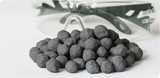
Chemistry aligned to agglomeration mechanisms
Our agglomeration solutions are designed to improve agglomerate performance through function‑led chemistry, focusing on binder efficiency, hydration behavior, and structural integrity rather than product form alone.
At the process level, agglomeration depends on mechanisms such as nucleation, coalescence, layering, compaction, and solid bridge formation. Nouryon’s chemistry supports these mechanisms by promoting controlled particle adhesion, moisture distribution, and rheological stability during agglomerate formation.
Portfolio‑based binder selection aligned to process constraints
Agglomeration performance is strongly influenced by site‑specific constraints such as mixing residence time, water chemistry, and mechanical stress during formation. Because these constraints vary across pelletizing, briquetting, and extrusion operations, no single binder chemistry is optimized for all conditions.
We, therefore, offer a portfolio of organic agglomeration binders with differentiated hydration behavior, bonding efficiency, and operational tolerance. This portfolio approach allows binder selection to be aligned with the dominant process constraint of a given operation—supporting stable agglomerate formation and runnability without forcing trade‑offs between strength development and process control.
How to Select an Agglomeration Binder
Binder selection depends on the dominant process constraint, such as mixing time, water chemistry, mechanical stress, and target agglomerate strength. Agglomeration performance is influenced by site‑specific operating conditions rather than a single variable.
Key factors typically considered during binder selection include:
Different organic binders are optimized to address different combinations of these factors. Aligning binder selection with the dominant process constraint helps maintain stable agglomeration and runnability without forcing changes to the process itself.
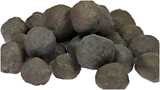
By improving agglomerate integrity and consistency, agglomeration chemistry supports system‑level mining performance—reducing fines generation, stabilizing material flow, and protecting downstream equipment and processes.
Dust control and material handling safety
Improved agglomerate strength and durability reduce dust formation and fines migration, supporting safer material handling and improved site conditions.
Water efficiency and moisture control
Efficient binder hydration and moisture management enable effective agglomeration without excessive water addition. This supports more stable downstream dewatering and material handling, particularly in operations facing water constraints or reuse requirements.
Purity, compliance, and downstream efficiency
High‑purity organic binders enable lower usage levels and reduce the introduction of non‑process materials. This supports downstream process efficiency and regulatory compliance in applications where product purity is critical. Sustainability outcomes are delivered through measurable process performance, not trade‑offs.
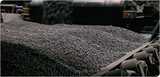
• Pelletizing of iron ore fines, potash, coal, graphite, and other
minerals
• Briquetting and extrusion under high pressure compaction
conditions
• Agglomeration processes requiring high purity and reliable
mechanical performance
Discuss your operating conditions with our technical teams. We typically review ore type, water chemistry and process constraints before recommending chemistry functions.
Armeen®, Armoflo®, Armoflote®, Aquamet®, Aquatreat®, Arquad®, Atrac®, Berol®, Celect®, Dissolvine®, Ethylan®, Expancel®, Finnfix®, Lankropol®, Lilaflot® Triameen®, Versa‑TL®, and Versaflex® are registered trademarks of Nouryon in several countries worldwide.