Dewatering aids
Stabilizing moisture release to improve water recovery
Dewatering is a critical stage in mineral processing responsible for removing water from mineral concentrates and slurries following concentration. Effective dewatering enables downstream handling, transport, storage, and further processing by reducing moisture content to controlled and predictable levels.
This stage directly influences filtration throughput, energy consumption, water recovery, and downstream solids characteristics. Dewatering performance affects not only the quality and consistency of the final product, but also the efficiency of drying and overall site water balance.
Dewatering challenges are intensifying as mines process finer particle sizes, lower‑grade ores, and more complex mineral slurries. Increased fines content, variable mineralogy, and constrained water availability place greater demands on filtration systems to deliver stable performance under less forgiving conditions.
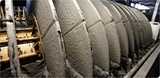

Dewatering performance is governed by how water is retained within filter cakes and how efficiently it can be released during filtration. Our dewatering solutions focus on surface‑active chemistry that targets residual moisture trapped within capillaries of the filter cake. By modifying surface tension and wetting behavior in vacuum filtration dewatering processes, our dewatering chemistry enables:
More efficient overall operation
Improved dewatering at this stage supports system‑level mining performance by stabilizing concentrate handling, reducing downstream energy demand, and improving consistency in downstream water and solids management.
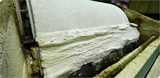
• Filtration‑based dewatering following concentration and
flotation processes
• Vacuum filtration systems under variable operating conditions
• Operations processing complex mineral slurries with high
fines content
• Sites prioritizing water efficiency, solids handling stability,
and downstream process reliability
Because filtration behavior is influenced by water chemistry, dewatering is often evaluated together with water treatment when addressing site‑wide water and solids performance.
Effective dewatering plays a central role in water efficiency by increasing the volume of water recovered and returned to the process. Improved moisture removal reduces water losses locked into filter cakes and, supporting higher water reuse in closed or partially closed circuits.
Reduced moisture content in concentrates lowers the energy required for thermal drying, contributing to lower overall energy demand and associated emissions.
By improving process control rather than increasing mechanical or thermal intensity, dewatering chemistry supports regulatory and sustainability objectives through operational efficiency and risk reduction, not trade‑offs in recovery or throughput.
Discuss your operating conditions with our technical teams. We typically review ore type, water chemistry and process constraints before recommending chemistry functions.
Armeen®, Armoflo®, Armoflote®, Aquamet®, Aquatreat®, Arquad®, Atrac®, Berol®, Celect®, Dissolvine®, Ethylan®, Expancel®, Finnfix®, Lankropol®, Lilaflot® Triameen®, Versa‑TL®, and Versaflex® are registered trademarks of Nouryon in several countries worldwide.