Flotation—Depressants
Enabling flotation selectivity through controlled gangue suppression
Flotation—Depressants
Enabling flotation selectivity through controlled gangue suppression
Depressants support mineral concentration by selectively suppressing unwanted minerals while preserving flotation of valuable phases. By modifying surface chemistry, they improve flotation selectivity and separation control, helping operations achieve more consistent recovery-grade performance in complex flotation systems.
Their role is critical in ores containing clays, talc, carbonaceous material, or other naturally hydrophobic phases that can compromise flotation selectivity and downstream stability.
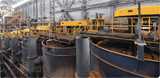
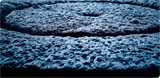
As ore mineralogy becomes more complex, unmanaged gangue flotation can reduce flotation selectivity and disrupt recovery-grade performance. Naturally floating gangue introduces variability into flotation and downstream processing, making selective depression essential for maintaining concentrate quality and predictable metallurgical outcomes.
Depressant performance matters because poor suppression can quickly propagate operational risk, affecting concentrate quality, reagent consumption, thickening behavior, and tailings stability. Selective depression is therefore essential to achieving robust flotation selectivity and predictable performance under variable operating conditions.
Depressant chemistry enables flotation control by selectively modifying the surface properties of unwanted minerals without suppressing valuable phases. Function‑led depressant chemistry focuses on:
Effective depressants operate within a narrow performance window that maximizes suppression of unwanted minerals while preserving flotation of valuable phases. This balance supports flotation selectivity, concentrate quality, and predictable metallurgical performance.
Improved depressant performance enhances flotation selectivity by reducing gangue recovery and limiting the entrainment of penalty elements. More controlled mineral separation supports higher concentrate quality, improved recovery-grade performance, and more predictable downstream processing, helping reduce variability across thickening, dewatering, and water reuse circuits.
Depressants contribute to sustainability through operational control.
Improved selectivity reduces unnecessary solids and water entrainment, supporting more efficient water reuse and reduced downstream handling challenges.
These outcomes are achieved through performance‑driven chemistry application, not through reduced recovery or process compromise.

Core brands
Discuss your operating conditions with our technical teams. We typically review ore type, water chemistry and process constraints before recommending chemistry functions.