Blasting—Sensitizers
Stabilizing explosive sensitivity to support predictable blasting performance
Blasting—Sensitizers
Stabilizing explosive sensitivity to support predictable blasting performance
Sensitizers play a critical role in blasting by enabling controlled initiation behavior in emulsion explosive formulations.
Emulsion matrices are inherently too dense and insensitive to sustain detonation on their own. Sensitizers introduce controlled void structures that reduce density and create localized hot spots, allowing the explosive to respond reliably to initiation under defined field conditions.
Consistent sensitization is essential to reducing variability at the very start of mining operations. Within Nouryon’s mining portfolio, sensitizer chemistry is positioned as application‑driven support for explosive material performance—not as a substitute for blast design or execution decisions.

Variability in explosive sensitivity can introduce operational risk before material is even broken.
Inconsistent sensitization can result in:
• Unreliable initiation response
• Loss of sensitivity during handling or transport
• Instability in explosive density
As blasting conditions become more complex—due to changing geology, temperature variation, and logistics constraints—stable sensitization behavior is essential to maintaining predictable detonation performance.
Sensitizer chemistry supports blasting performance by introducing controlled void structures within the emulsion matrix, enabling:
• Density reduction to a detonable state
• Hotspot formation for reliable initiation
• Controlled sensitivity and detonation response
• Stability under pumping, transport, and loading conditions
Rather than influencing blast design, sensitizers function as material‑level performance enablers, ensuring explosives respond as intended under defined operating conditions.
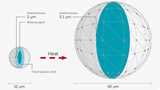
Stable sensitization supports consistent detonation behavior at the blasting stage, helping reduce variability introduced into downstream processes.
By improving the reliability of explosive response, sensitizer chemistry contributes to more stable operating conditions across the mining value chain—without extending into blast design or comminution strategy.
In blasting, safety and sustainability are closely linked to material stability and operational control, where reliable sensitization supports:
• Reduced risk of misfires
• Safer handling and transport
• Fewer corrective interventions
This enables improved operational efficiency and risk management while maintaining consistent explosive performance.
Discuss your operating conditions with our technical teams. We typically review ore type, water chemistry and process constraints before recommending chemistry functions.
Armeen®, Armoflo®, Armoflote®, Aquamet®, Aquatreat®, Arquad®, Atrac®, Berol®, Celect®, Dissolvine®, Ethylan®, Expancel®, Finnfix®, Lankropol®, Lilaflot® Triameen®, Versa‑TL®, and Versaflex® are registered trademarks of Nouryon in several countries worldwide.