
Find:

Enabling effective and controlled stimulation treatments

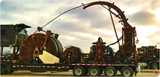
Oil rig during the stimulation process.

Key functions

Stimulation treatments are carried out under high temperature and chemically complex conditions that place strict demands on fluid systems.

Additive performance influences treatment placement, rock-fluid interactions, tubular integrity, and the transition back to stable production.

Our stimulation portfolio focuses on chemical performance, compatibility, and robustness in complex fluid systems.

This performance-driven foundation is delivered through a set of key functions that enable reliable and consistent application outcomes.

Viscosifiers and diverting agents
Viscoelastic surfactant systems and related chemistries that deliver controllable viscosity and self-diversion under high-temperature, high-shear conditions. These fluids support more uniform treatment placement, effective diversion, and reduced formation damage compared with polymer-based systems, while enabling cleaner flowback and easier post-treatment cleanup.

Acid gelling agents and emulsifiers
Surfactant-based gelling agents and emulsifiers that provide acid systems with the viscosity, stability, and compatibility needed for acid fracturing and diversion across a wide temperature range. These technologies enable improved leakoff control and wormhole propagation while minimizing polymer-related residue and promoting efficient post-acid cleanup.

Delayed acidizing systems
Chemistries engineered to control the timing and rate of acid release, enabling deeper penetration and more uniform stimulation in both sandstone and carbonate formations. These delayed systems improve placement efficiency, support controlled wormhole development, and help mitigate near-wellbore face dissolution, especially in high-temperature and extended-reach wells.

Matrix stimulation fluids and scale dissolvers
Formulated fluids designed to restore and enhance near-wellbore permeability by dissolving damage, fines, and scale in sandstone and carbonate formations. Chelating agents and targeted scale dissolvers help remove sulfate and carbonate deposits, support improved injectivity and productivity, and limit the risk of secondary precipitation or formation damage.

Acidizing and hydraulic fracturing additives
Specialty surfactants, corrosion inhibitors, clay control agents, and other additives that support reliable acidizing and fracturing performance in challenging downhole environments. Formulations are designed to balance fluid stability, formation compatibility, and asset protection, helping operators manage risk, enhance treatment efficiency, and meet operational and regulatory constraints.

Designed for field‑relevant performance

Stimulation chemistries must perform reliably under conditions that differ significantly from laboratory baselines. Our focus is on:

  • Performance at elevated temperatures relevant to targeted reservoirs
  • Stability and compatibility in multi‑additive fluid systems, including friction reducers, surfactants, and production chemistries used later in the well’s life
  • Consideration of interactions with formation rock, completion materials, and produced fluids

This helps support stimulation treatments that not only achieve their immediate objectives, but also transition more smoothly into stable production, with reduced risk of chemistry‑related issues.

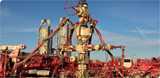
Wellheads in oil & gas production
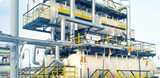
Oilfield water processing station

Integration with production and water management

Stimulation does not end when pumping stops. Residual additives and treatment by‑products move into the production system and can influence separation, corrosion, and produced‑water handling.

We take into account:

•    How stimulation chemistries interact with production additives
      such as demulsifiers and corrosion inhibitors
•    Effects on separation efficiency and produced water treatment
•    Alignment with regional and regulatory requirements, including
      OSPAR, REACH, and TSCA where applicable

By considering these interactions upfront, our goal is to help customers reduce the risk of downstream issues, support more consistent production, and maintain alignment with regulatory and operational requirements.

Request technical input

Ask for technical assistance or get detailed product information based on your operational needs.

We respect your privacy.

We use essential and non-essential cookies to provide, secure, analyze and improve our services. Click 'Agree' to accept or learn more about our Cookie Policy and edit your preferences. 

You can change settings at any time.

Edit